
There's a part of every home that a standard inspection doesn't cover — and for buyers of older Arlington TX homes, that part could be the most expensive surprise waiting after closing.
We're talking about the sewer line. The underground pipe that carries waste from every drain in your home to the city's municipal connection. Out of sight, out of mind — until it fails.
If the home you're buying was built before 1990, there's a real chance it still has the original cast iron sewer line. And that line has been underground for 35 to 50 years. Here's what you need to know before you close.
What Is a Sewer Scope Inspection?
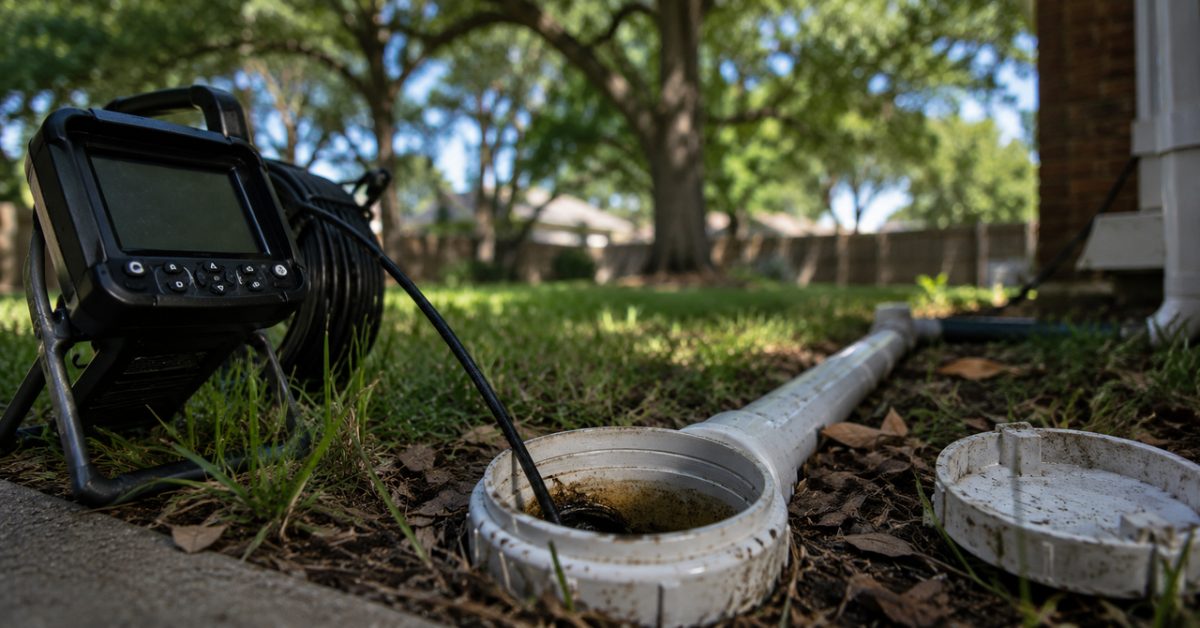
A sewer scope inspection uses a flexible camera — fed through a cleanout access point — to visually inspect the interior of your main sewer drain line from the home to the point where it connects to the city sewer or septic system.
The camera travels the full length of the line, recording what it finds in real time. Your inspector can see the condition of the pipe walls, identify root intrusion, spot cracks and offsets, and document any sections that are sagging or holding standing waste.
The entire process typically adds 30 to 60 minutes to your standard home inspection. The information it delivers can save you from one of the most expensive post-closing repair bills a homeowner can face.
Why Are Sewer Scope Inspections So Important for Arlington TX Homes?
Arlington TX has a large inventory of homes built in the 1960s, 1970s, and 1980s. During those decades, cast iron was the standard material for residential sewer lines. It was durable, widely available, and expected to last 25 to 40 years.
The problem is that 25 to 40 years was a long time ago.
Cast iron deteriorates from the inside out. As it ages, the interior surface of the pipe develops scaling — a buildup of rust and mineral deposits that progressively narrows the pipe's diameter. Eventually, those narrowed sections become prone to blockage. Meanwhile, the pipe walls themselves weaken, developing cracks and fractures that allow root systems from Arlington's mature trees to find their way in.
The result is a pipe that may appear to function normally — drains seem slow, maybe there's an occasional backup — until one day it doesn't function at all. At that point, you're looking at a sewer line replacement that typically runs $4,000 to $15,000 depending on depth, length, and access.
A sewer scope inspection costs a fraction of that. And if it finds a problem, you have the leverage to negotiate before you close.
What Does a Sewer Scope Look For?
When Jantson McAffrey scopes a sewer line on an Arlington TX home inspection, here's what the camera is specifically looking for:
What are the most common sewer line problems found in older Arlington TX homes?
- Cast iron corrosion and scaling — Interior rust buildup that narrows the pipe and creates chronic slow drains and blockage points
- Root intrusion — Tree and shrub roots that have found their way through joints or cracks and are growing inside the pipe
- Belly and sag sections — Low points in the pipe where the line has settled below proper slope, causing waste to collect and back up
- Cracks and fractures — Structural breaks in the pipe wall, often caused by soil movement — which, in Arlington TX, is directly tied to the same North Texas clay soil that affects foundations
- Joint offsets — Sections of pipe that have shifted out of alignment at the connection point, creating a ledge where waste catches
- Standing water — A sign of a belly, blockage, or improper slope that prevents the line from draining fully
Not every sewer scope finds problems. Sometimes the result is a clean line — and that's a great outcome too. Confirmation that the sewer line is in good condition removes a major unknown and gives you confidence going into closing.
Does a Standard Home Inspection Include the Sewer Line?
No — and this is one of the most common misconceptions among first-time buyers.
A standard home inspection evaluates the visible and accessible components of the home: roof, foundation, structure, electrical, plumbing fixtures, HVAC, attic, insulation, and interior. The underground sewer line is a separate system that requires specialized camera equipment to inspect.
Texas TREC Standards of Practice do not require home inspectors to scope sewer lines as part of a standard inspection. It is always an add-on — and always worth having on a pre-1990 Arlington home.
How Do I Know If the Home Has Cast Iron Pipes?
The easiest way is to ask your inspector. During a standard inspection, Jantson evaluates the visible plumbing throughout the home — including any exposed drain lines in the crawl space, basement, or utility areas.
If the home was built before approximately 1985 and has not had plumbing updates, there's a strong probability that the main sewer line is cast iron. Homes built after 1985 were more commonly plumbed with PVC drain lines, which are significantly more durable and not subject to the same corrosion issues.
Even on homes with PVC sewer lines, a sewer scope can be worth doing if the home is near mature trees, sits on a lot with poor drainage, or is approaching 20 to 25 years of age. Root intrusion and belly sections can occur on PVC lines too — just less commonly.
What Happens If the Sewer Scope Finds a Problem?
Finding a sewer line issue before closing puts you in control. Here's how most buyers handle it:
- Negotiate a repair credit. Ask the seller for a price reduction or closing cost credit equal to the estimated repair cost. You close, then handle the repair on your own schedule and with the contractor of your choice.
- Require seller repair before closing. Make the repair a condition of the contract. The seller hires a licensed plumber to address the issue — and you receive documentation of the completed work before closing.
- Request a plumber's evaluation. For significant findings, you may want a licensed plumber to confirm the scope's findings and provide a repair estimate before deciding how to proceed.
- Walk away with your earnest money. In Texas, a sewer scope finding during the option period can be grounds to terminate the contract and receive your earnest money back. Knowing before your option period expires is critical.
Whatever path you choose, the information gives you options. Closing without that information means the problem becomes yours — and in most cases, there's no recourse after the deed transfers.
What Arlington TX Neighborhoods Have the Most Sewer Line Risk?
Any Arlington neighborhood with a significant concentration of pre-1985 housing carries higher sewer scope risk. This includes established neighborhoods in central and south Arlington, areas near the University of Texas at Arlington campus, older subdivisions along major corridors like Division Street and Pioneer Parkway, and any neighborhood with large, mature trees — oak, elm, and pecan root systems are particularly aggressive.
Newer developments in east and southeast Arlington that were built in the 1990s and 2000s are more likely to have PVC lines — but the clay soil movement that affects foundations in those areas can still cause joint offsets and belly sections over time.
Schedule Your Sewer Scope Inspection in Arlington TX Today
Don't close on an Arlington TX home without knowing what's underground. Jantson McAffrey is a TREC Licensed Home Inspector (#26094) and InterNACHI Certified Professional Inspector serving Arlington, Bedford, Fort Worth, Hurst, Euless, and all of Tarrant County. Flexible scheduling 6 days a week. Same-day digital reports delivered within 24 hours via Spectora.